
For my Master’s of Education program in Instructional Design, I studied explicit writing instruction in the primary classroom. So, for my capstone project, I designed an explicit writing lesson plan structure based on the 2 years of research I conducted during my program. Today, I’m sharing the results of that project.
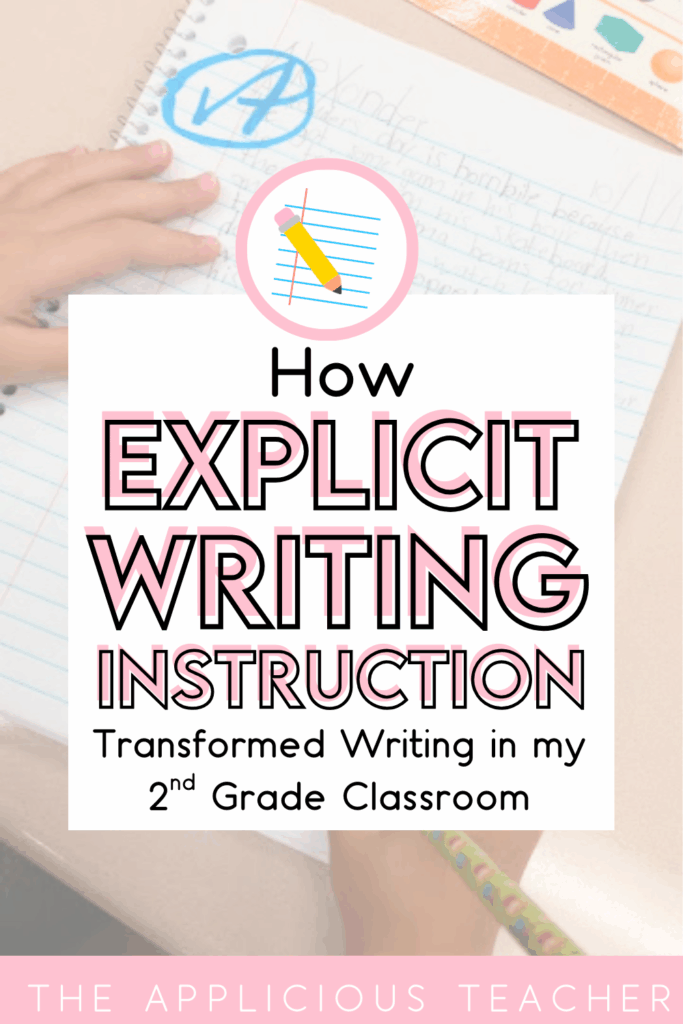
For years, I watched capable, bright second graders freeze when asked to write more than a few sentences.
They had ideas.
They had opinions.
They wanted to share what they knew. (Verbally, anyway)
But when it came time to put those thoughts on paper, many didn’t know where to start—or how to keep going.
These were the exact thoughts I had when I started my Master’s of Education program with Western Governor’s Univerisity in 2020. Through two years of research and design, I was able to stop guessing and learned how to actually solve this problem
What happened next became the foundation for every writing unit I teach today.
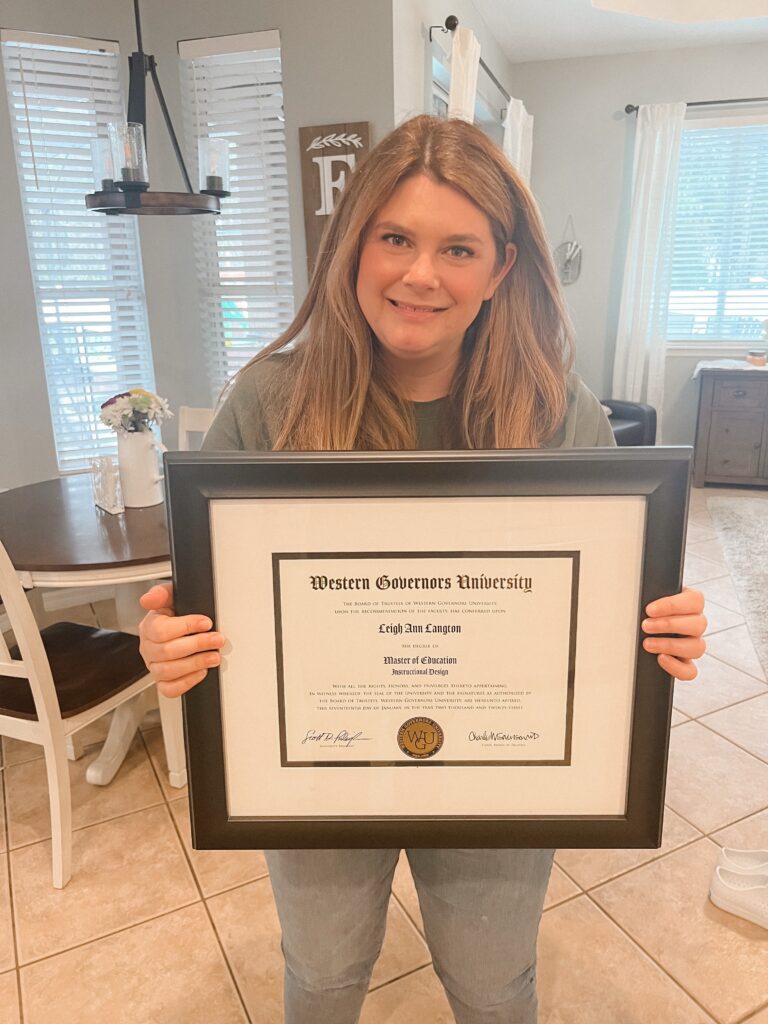
This post shares the story of that work, a real classroom case study on how direct, explicit writing instruction dramatically improved my second graders’ writing skills.
The Problem I Kept Seeing in My Classroom
My second graders struggled to write a clear, focused paragraph. I mean, don’t most students?
Common challenges included:
- Writing only one short sentence
- Omitting introductions and conclusions
- Jumping between ideas without transitions
- Weak writing stamina and confidence
These struggles weren’t limited to writing time. They showed up in reading responses, science explanations, and math reasoning, making it harder for students to show what they actually understood.
The constant research I was required to complete weekly consistently showed that writing is one of the most complex literacy tasks students must master, requiring idea generation, organization, sentence construction, and conventions… all at once.
And overwhelmingly, research showed that students need explicit instruction to be better writers.
So I asked a simple question:
What would happen if I stopped assuming students would “pick up” writing, and instead taught it explicitly, step by step?
Designing a Writing Program with Intention
So, for my capstone project, I designed a structured, explicit writing program focused on expository paragraph writing.
The instructional design was built around:
- Clear paragraph structure (introduction, details, conclusion)
- Explicit modeling and shared writing
- Student-friendly rubrics are used consistently
- Daily writing practice with feedback
- Guided editing and revision
The unit was planned for ten days (implemented over eight due to time constraints- hello hurricane days in Florida!) and taught directly in my second-grade classroom.
To measure impact, I created and used an Expository Paragraph Writing Rubric that assessed ten key components, including focus, transitions, closing sentences, and writing conventions.
Students completed writing samples before, during, and after the instructional unit.
And today, I’m sharing those results with you!
What the Data Revealed
The results?
The results were powerful.
Overall Writing Growth
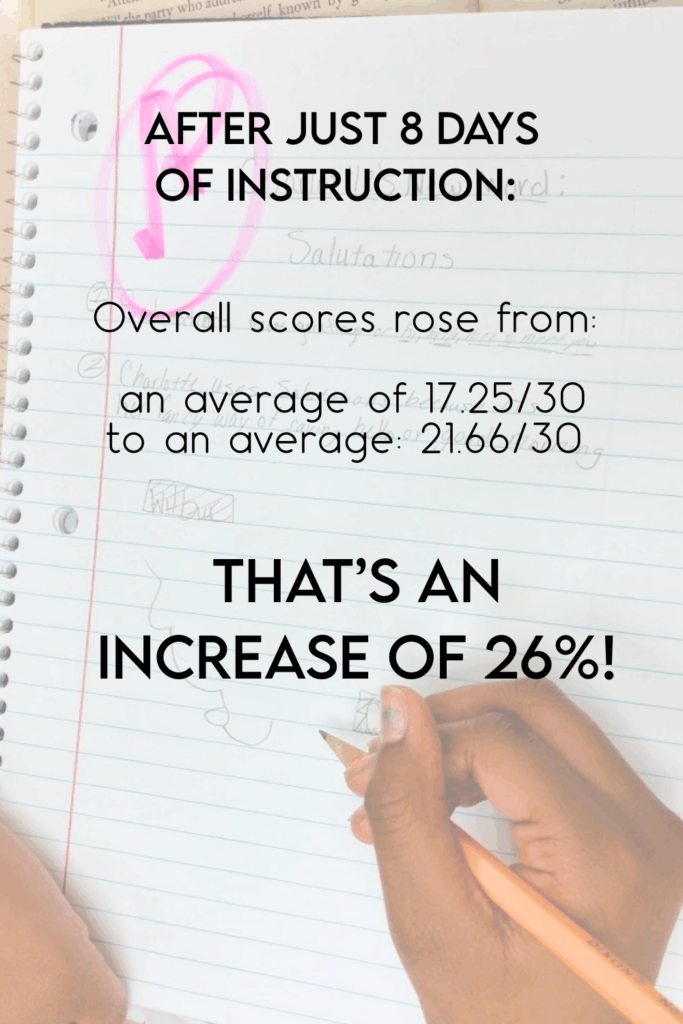
- Average writing scores increased by 26%
- with a pre-instruction average: 17.25 / 30
- and a post-instruction average: 21.66 / 30
This growth occurred in just eight days of focused instruction. Guys… only 8 days! Imagine what could happen if we used this ALL YEAR?
So where were the biggest gains happening?
The Biggest Gains: Structure Matters
The most dramatic improvements were in paragraph structure, the very skills students struggled with most at the start.
- Closing sentences increased by 567%
- Use of transition words increased by 226%
Before instruction, most students didn’t include a closing sentence at all. After explicit teaching, students were independently wrapping up their ideas with confidence.
So what does this teach us about writing?
What This Taught Me About Writing Instruction
This case study confirmed something I had long believed as a teacher:
Students don’t struggle with writing because they lack ideas.
They struggle because they haven’t been taught how writing works.
When students were given:
- Clear expectations
- Consistent structure
- Time to practice
- Language to talk about their writing
They rose to the challenge.
Even more importantly, their confidence changed. Writing stopped being something to avoid and became something they could actually do.
Why I Still Use This Writing Framework Today
That capstone project didn’t end when I earned my degree.
I’ve used this same instructional framework to build:
- Narrative writing units
- Informational writing units
- Opinion writing units
- Seasonal and content-area writing projects
It became the backbone of my classroom writing instruction…and the reason my students now see themselves as writers.
Want to Use This Approach in Your Classroom?
If you’ve ever thought:
- “My students don’t know how to start writing.”
- “They need more structure—but I don’t want to kill creativity.”
- “I don’t have time to reinvent writing instruction from scratch.”
I created something for you.
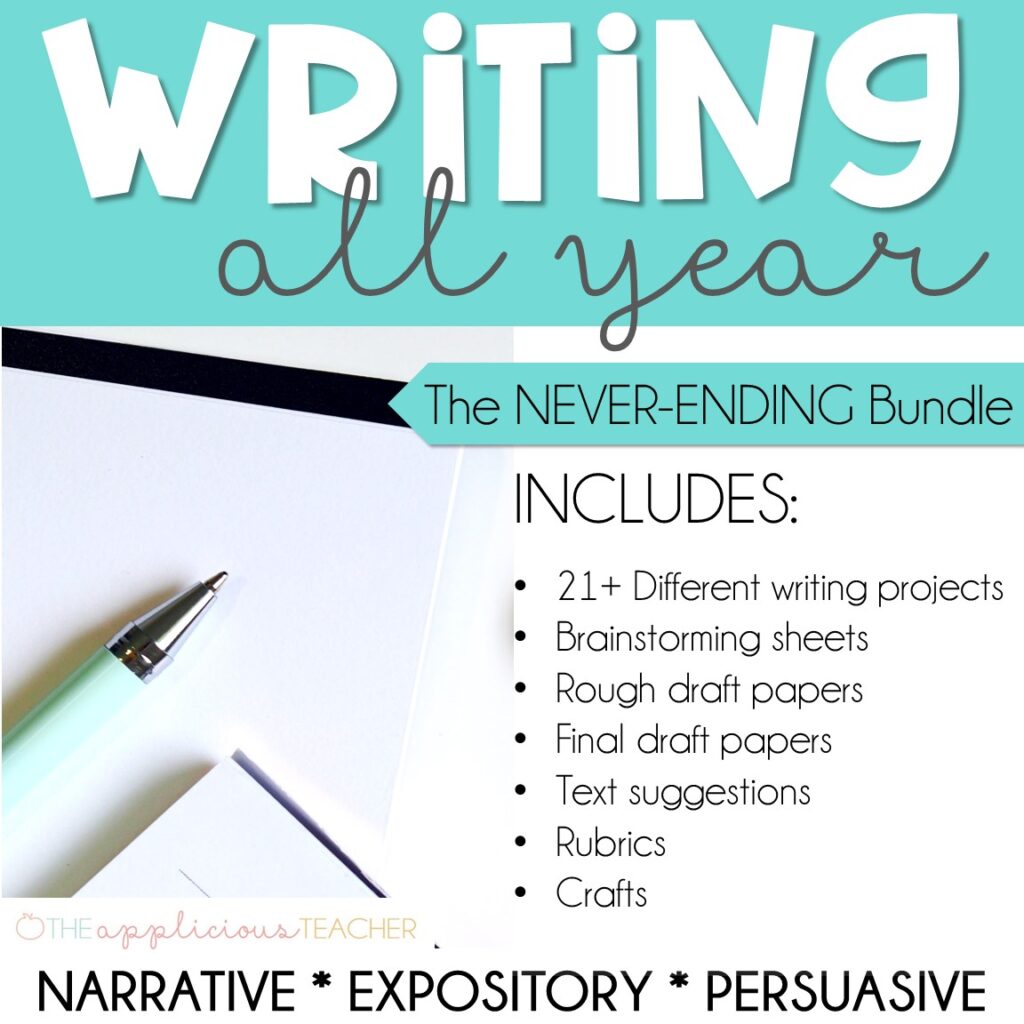
The Writing All Year Bundle
The Writing All Year Bundle takes the exact instructional framework from this case study and turns it into ready-to-use writing units you can implement immediately, without the extra prep or guesswork.
It’s the system I trust because it’s:
- Classroom-tested
- Research-based
- Built by a teacher who uses it every single day
You don’t need more writing ideas.
You need a system that works.
Check out the Writing All Year Bundle and bring purposeful, confidence-building writing instruction into your classroom.