
Looking for fun and easy jellybean graphing activity this Spring season? This Jellybean PBL is exactly what you need! Read on to learn more about how I used this Jellybean Factory Mix Up PBL in my second-grade classroom to build problem-solving skills, graphing skills, and critical thinking, all while my students thought we were having “fun”!
If you’ve ever wanted your students to care about data, graphing, and problem solving, this jellybean PBL might be the exact thing you’re looking for!
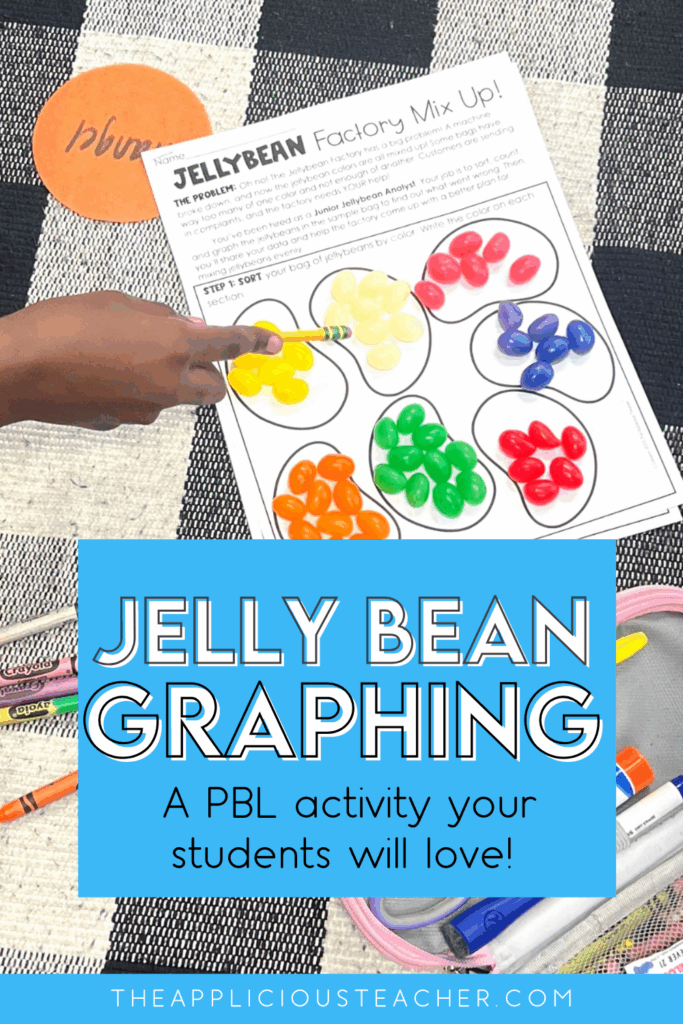
One of my favorite ways to teach data analysis is through problem-based learning, and this Jellybean Factory Mix-Up PBL never fails to hook my students from the very start. Instead of beginning with charts or definitions, students are dropped right into a real-world problem and asked to think like mathematicians and problem solvers.
And yes of course… jellybeans are involved 🍬
What Is the Jellybean Factory Mix-Up PBL?
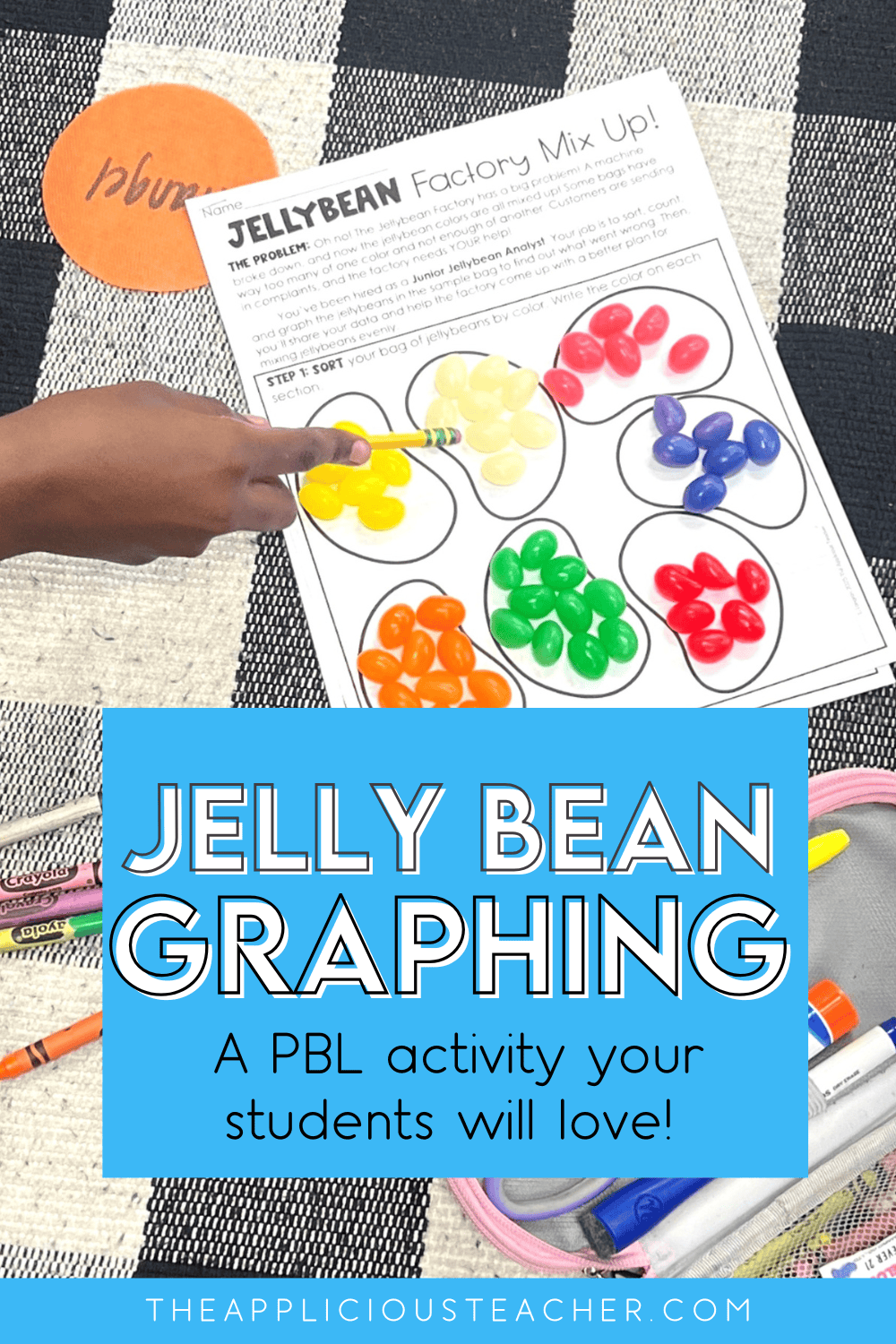
In this Jellybean Problem-Based Learning project, students are hired as Junior Jellybean Analysts to help a factory solve a big problem:
The jellybean sorting machine has malfunctioned, and customers are complaining about uneven color distribution.
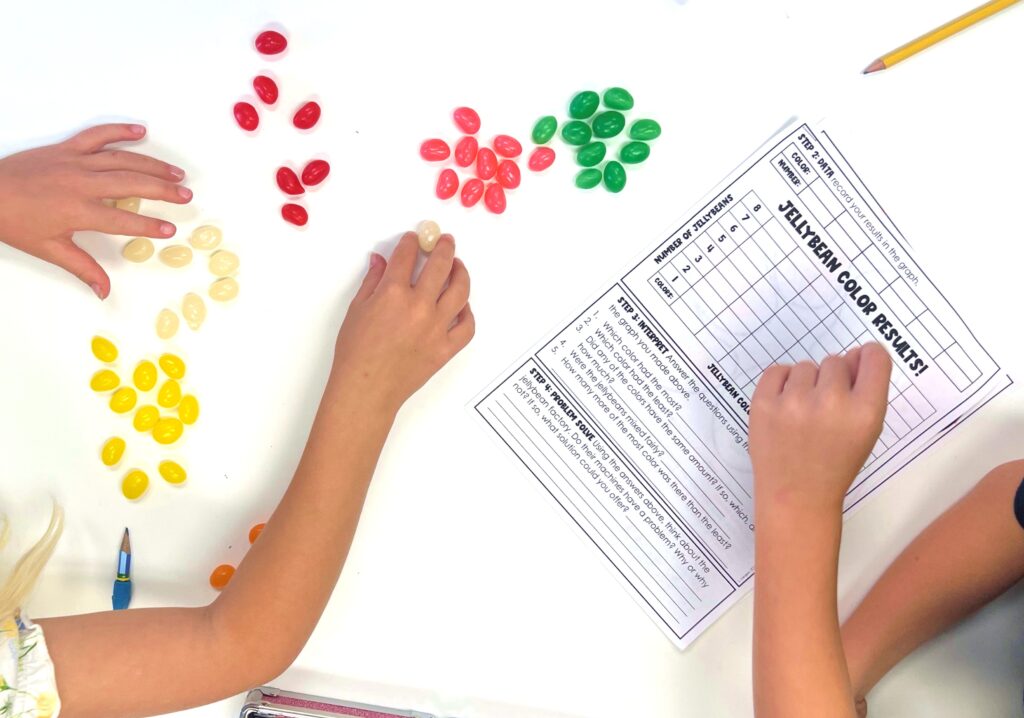
Students work in small groups to:
- Sort jellybeans by color
- Collect and record data
- Create a bar graph
- Analyze the results
- Decide whether the factory’s machines are working properly
- Propose a solution to help solve the problem
The best part? Students don’t even realize how much math they’re actually doing. They’re too busy solving the problem.
How I Set Up This Jellybean PBL in My Classroom
One of the reasons I love this activity is how simple the setup is.
Here’s what I did:
I started with a large bag of jellybeans and split it into smaller sandwich- or quart-sized baggies. I made enough for groups of 3.
Then I put each baggie on a tray, along with its printed project materials. Honestly, these lunch trays have been a game-changer in completing so many projects this year! I highly suggest you check them out!
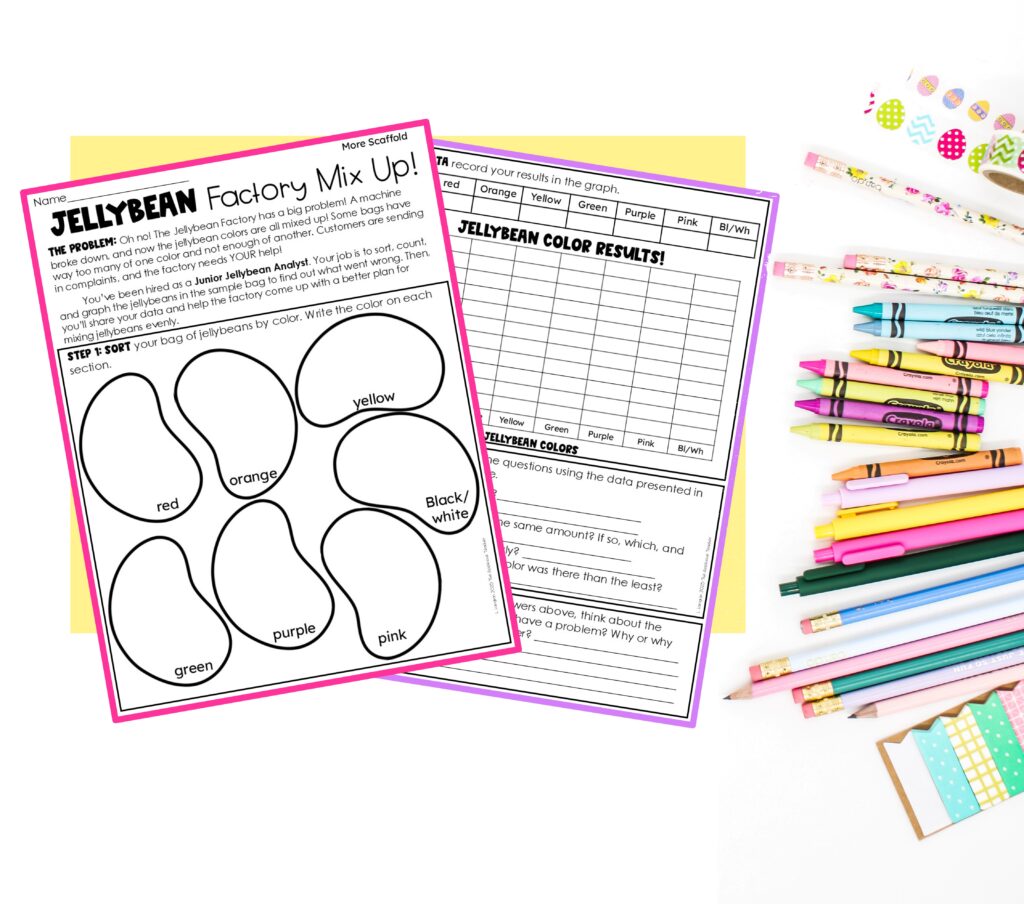
Each group received only one Jelly Bean Mix UP PBL Booklet. I stapled the pages together so that students could detach the graphing page and easily move between the two pages to complete the project.
A Couple of Teacher Tips:
- More jellybeans = more data = more discussion (and more time).
- Fewer jellybeans = quicker lesson.
Adjust the jellybean amount to better fit your needs in terms of time and complexity.
I also reviewed expectations ahead of time (no throwing, no eating- these were test jellybeans. There would be non-test jellybeans to have at the end of the activity!😄), which made everything run smoothly.
From there, I set the stage by reading the problem with students. We discussed each step of the process (sorting, then graphing, and finally answering the questions).
From there, I let students work in their groups of 2-3 to complete the project. As students worked, I walked around to support as needed.
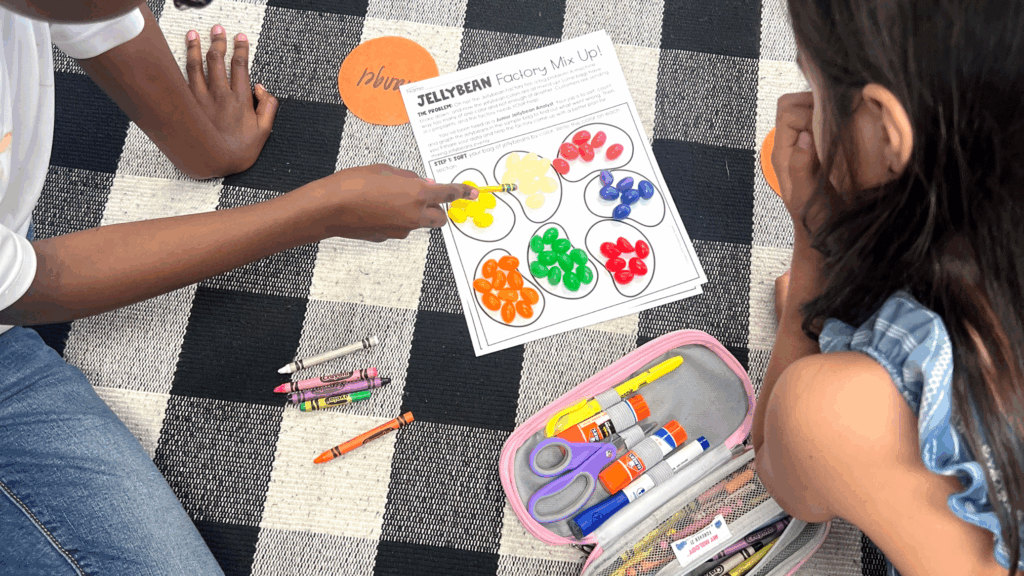
I did take a moment about halfway through to review how to set up the bar graph, as some students were struggling to make sections big enough for their counts.
As students finished, I had them clean up and throw away their “sample jellybeans”. I gave them a small handful of jellybeans to enjoy as other students finished up.
Once all groups were done, we reviewed their results. So many of the students discussed that the colors should all be even, until someone pointed out that not many people like the black jellybeans and that maybe their machines should sort more of the pink and yellow into bags and less black and white. It was a great conversation!
I love hearing how their little minds work!
Why This Jellybean Activities Works So Well
So many times, I shy away from bigger projects because I feel like there isn’t enough time in our schedule. And I almost did that with this project, but then I realized, this Jellybean PBL checks all the boxes:
- Hands-on and engaging
- Built-in collaboration
- Real data students actually care about
- Standards aligned
- Natural math talk and justification
- Multiple entry points for different learners
The resource includes two versions of the student packet—one with more scaffolding and one with less—so it’s easy to differentiate without creating extra work for yourself.
Teacher Tips for a Smooth PBL Experience
Here are a few things that made this lesson especially successful in my classroom:
- Group size matters: I recommend groups of 2–3 students (no more than 4). This keeps everyone involved.
- Model the graph once: If your students are new to bar graphs, build the first one together and talk through skip counting.
- Pause for discussion: Stop after sorting and data collection to let students make predictions before graphing.
- Stretch the learning: Ask why a factory might want more of one color than another, this leads to great conversations!
- End on a high note: After cleanup, I pass out a small handful of jellybeans. Motivation = handled.
The Real Magic: Student Thinking
What I love most about this project is the thinking.
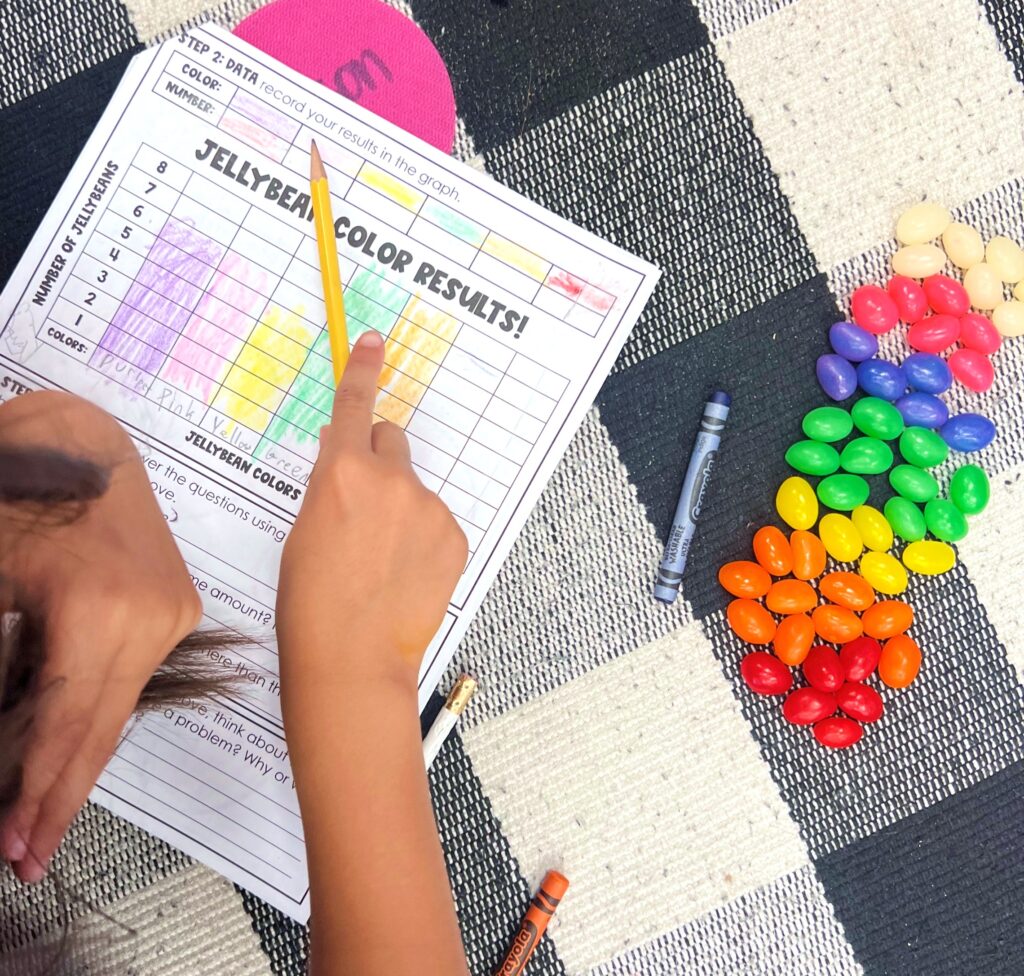
Students aren’t just answering questions—they’re:
- Explaining fairness
- Comparing quantities
- Defending conclusions
- Proposing real solutions
It’s the kind of math work that sticks.
Want to Try This Jellybean PBL in Your Classroom?
If you’re looking for a low-prep, high-engagement math activity that builds data, graphing, and problem-solving skills, this Jellybean Factory Mix Up PBL is classroom-tested and ready to go.
Grab the Jellybean Factory Mix Up Problem-Based Learning Project here and bring meaningful, hands-on math to your students—without extra prep.
Your students will love it.
Your math block will feel purposeful.
And you’ll love watching the thinking happen.
Bringing PBLs to Your Classroom
Project-Based Learning doesn’t have to be complicated to be powerful. Sometimes it starts with something as simple as a small bag of jellybeans and a problem to solve. The Jellybean Factory Mix Up turns the traditional jellybean graphing activities into a meaningful, math-thinking project. Where students sort with purpose, graph with intention, and use real data to back up their ideas. Instead of asking, “Is this right?” they begin asking, “What does the data tell me?” And that shift, from completing work to solving problems, is where true learning happens.
If you’re ready to bring hands-on engagement and deeper math conversations into your classroom, the Jellybean Factory Mix Up is ready to help your students think like real mathematicians.