Getting students to annotate text without highlighting the entire passage? A challenge to say the least! Today, I’m sharing one of my favorite strategies for getting students to annotate text in a fun, but meaningful way! SNOTS, or small notes on the side, is the perfect strategy for helping students learn how to annotate text. All you need is a green highlighter or a colored pencil and some text to SNOT all over! No tissues needed!
The Highlighter Problem
Have you ever handed your students a highlighter and watched them turn the entire page yellow?
Yeah… been there, too.
As teachers, we want our students to interact with the text… You know, underline key ideas, jot connections, and really think while they read. But for many elementary students, annotating text feels like a tedious chore instead of a powerful comprehension strategy.
That’s why I knew I had to find a way to make it fun, memorable, and meaningful.
Enter:
SNOTS: Small Notes On The Side.
This silly little acronym (that makes kids giggle every single time!) completely transformed the way my students annotate and think about what they read.
Why Traditional Annotation Falls Flat
Let’s be honest…traditional annotation strategies are often better suited for middle or high school. Asking 8-year-olds to highlight the main idea and supporting sentences, or to make their inferences in the margins, can lead to confusion… or, worse, disengagement.
Students either:
- Highlight everything (hello, neon pages), or
- Don’t mark anything because they’re unsure what’s important.
They need a way to connect the annotation to ownership, not obligation. That’s where SNOTS comes in.
What Is the SNOTS Strategy?
SNOTS stands for Small Notes On The Side …and yes, it’s as delightfully gross as it sounds.
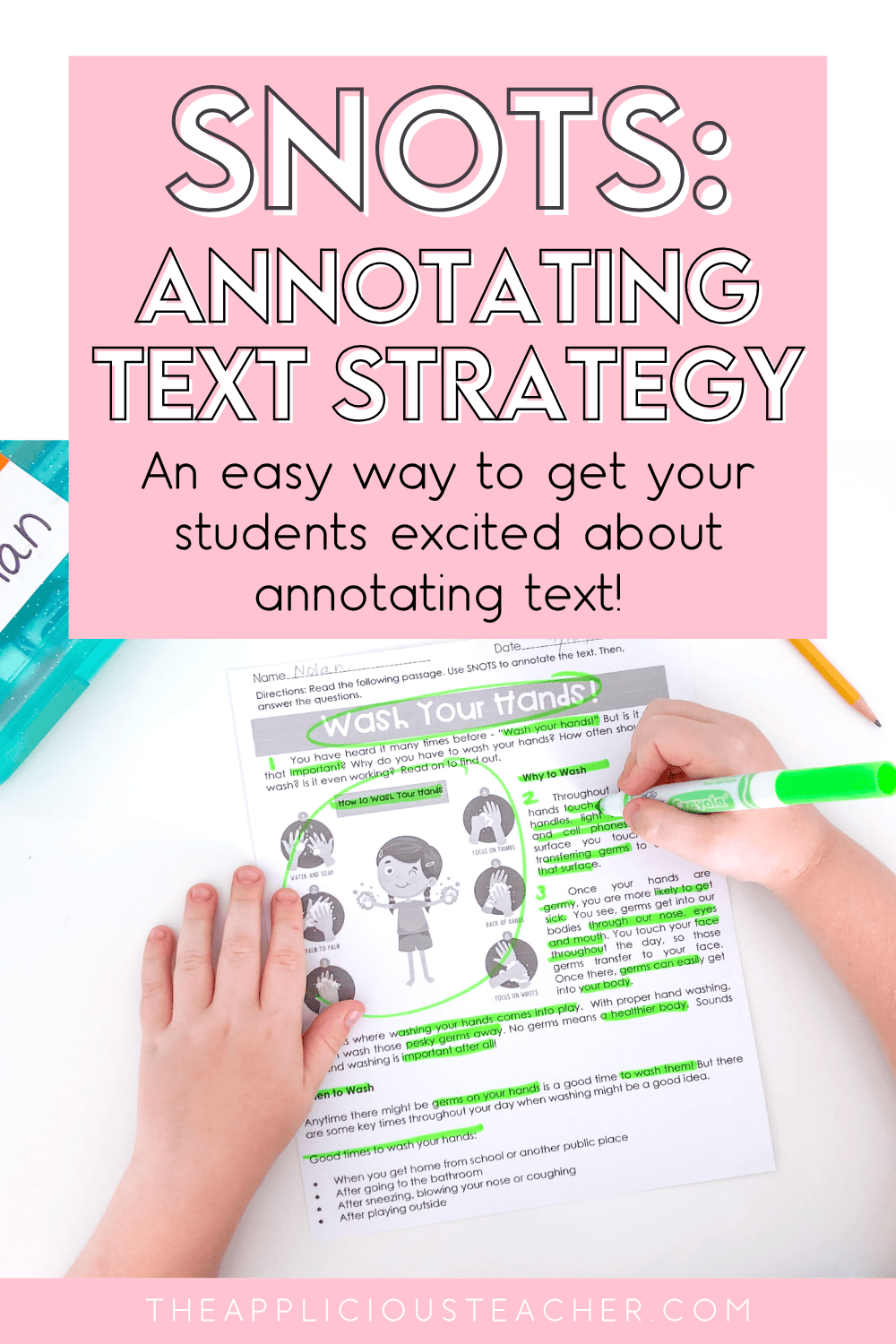
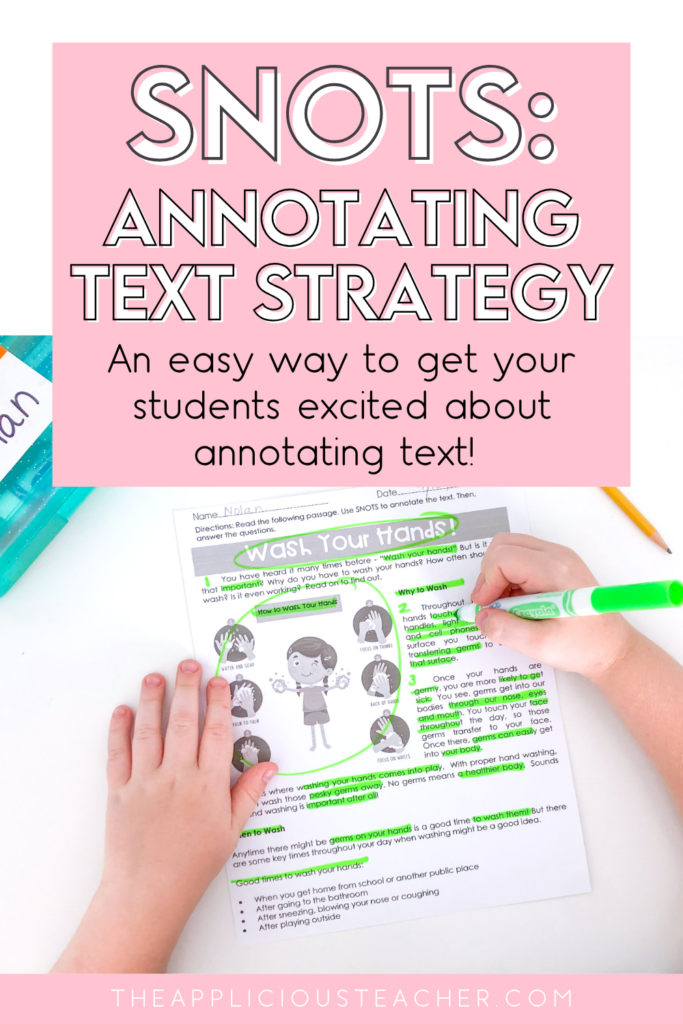
Instead of complicated codes or color systems, SNOTS invites students to jot down their thinking directly in the margins and highlight what is important or notable. “SNOTS” are quick reactions, questions, or connections.
Here’s what it might look like:
- Highlighting the sentence that explains that blood is red because of hemoglobin.”
- Highlighting a section that they connect with, “Oh, this reminds me of when I got a mosquito bite!”
- Highlighting important facts, dates, and bolded words.
It’s quick, authentic, and kid-friendly — because it encourages them to leave a trail of their thinking.
Teaching Students to SNOTS Step-by-Step
When introducing this strategy, I like to keep it playful but structured.
Here’s my go-to approach:
Step 1: Build Background with the Interactive Anchor Chart
Together, create a class chart that defines what a “SNOT” is, what types of notes to include, and examples of meaningful thinking.
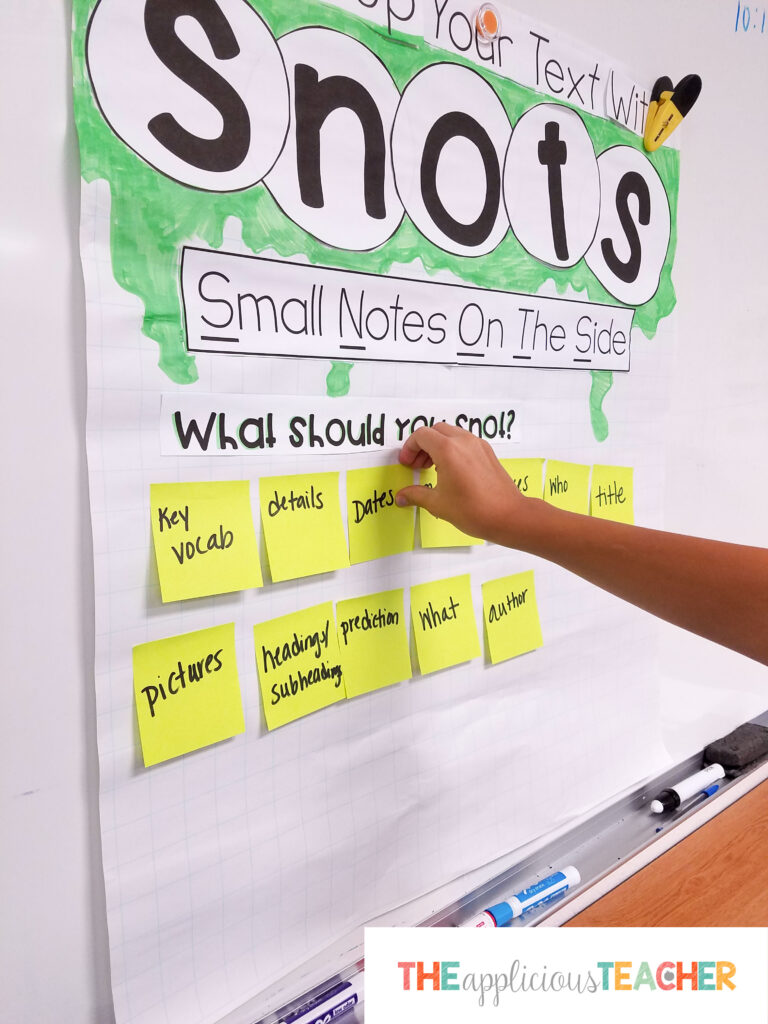
You can even have students create their own mini-reference posters to keep in their ELA journals as reminders!
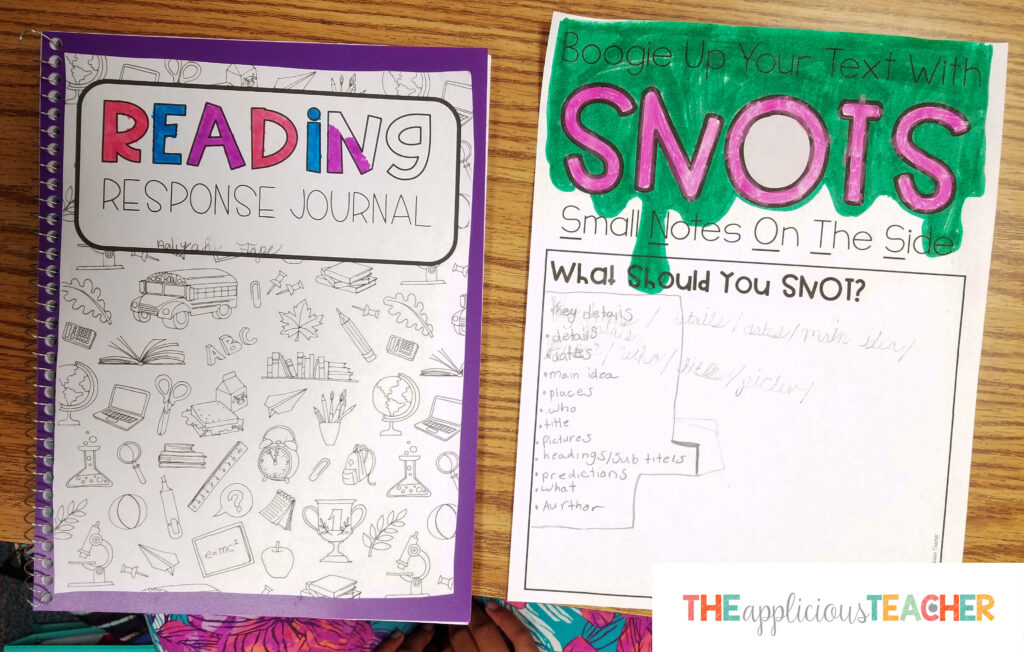
Step 2: Model the Process with a High-Interest Passage
I love kicking things off with “The Real Deal on Boogers” . Why yes, this is an actual article about snot! It’s the perfect mix of educational and hilarious, and it instantly hooks them.
As we read, I model my own “snots” out loud: “Hmm, I wonder why our bodies make mucus?”
Step 3: Practice Together, Then Release Responsibility
After modeling, we SNOT together as a class with another short text. Then, students try it independently, using the SNOTS mini chart as a reminder of the types of notes to write.
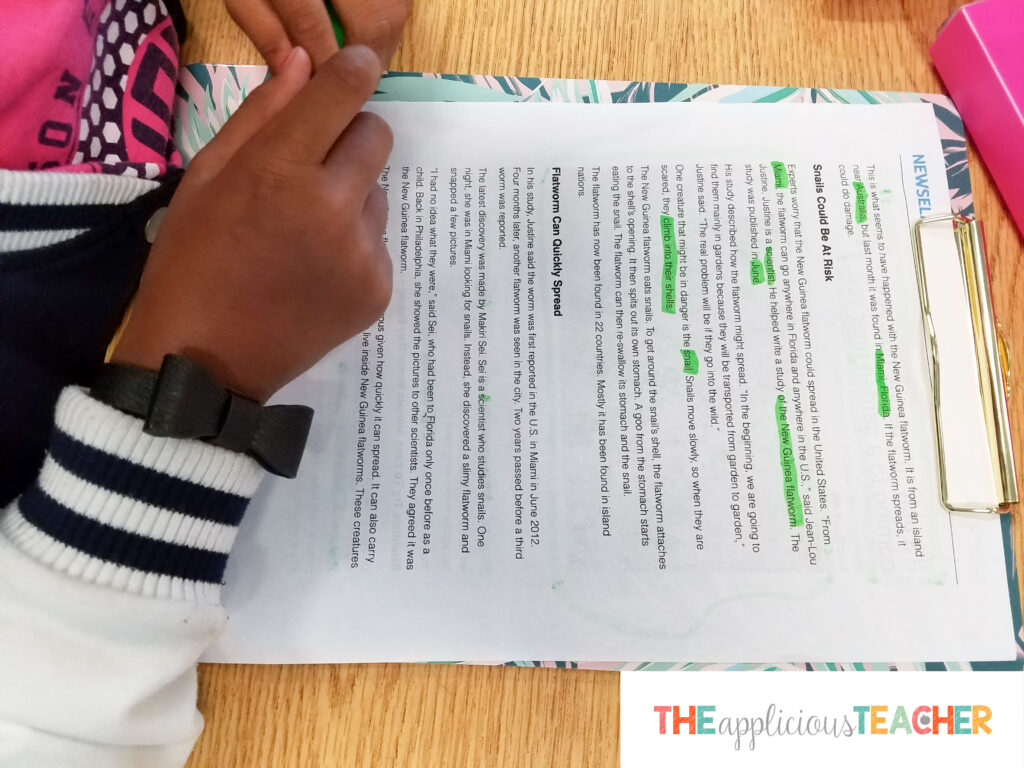
You can get a full lesson review from my fifth-grade ELA classroom here!
Keep the Momentum Going with High-Interest Passages
Once students understand how to SNOT, the real magic happens when you give them engaging reading material.
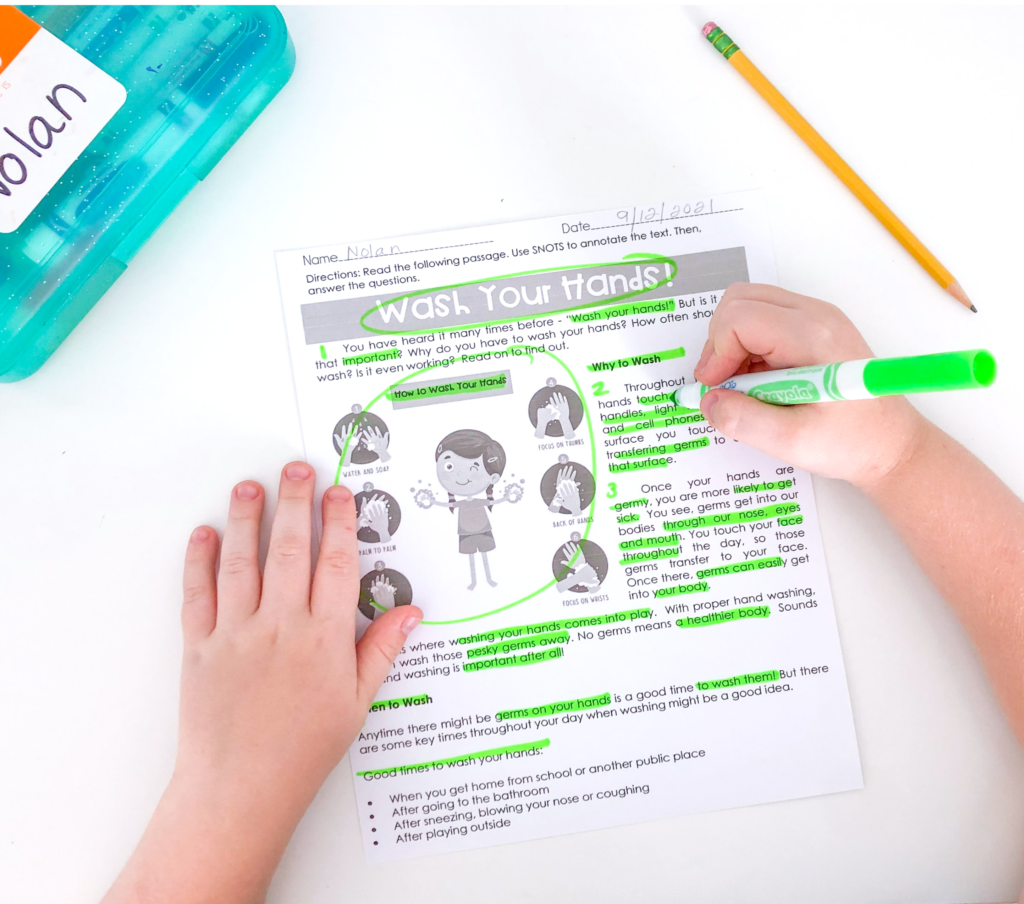
In my classroom, we use the SNOTS Reading Passages bundle to keep the practice going. The topics are gross, silly, and science-y, everything kids love!
Some class favorites include:
- Why is Blood Red?
- Nose Hairs Save the Day
- Shoo Fly!
- Cow Burps (Yes, really!)
Each passage comes with comprehension questions and a sample “SNOTTED” version so you can model expectations without spending hours prepping.
Teachers have told me that after using SNOTS, their students:
- “Don’t highlight everything anymore — they actually think about what’s important.”
- “Get so excited to ‘SNOT’ up their papers every time we read.”
Using SNOTS to Build Comprehension and Confidence
SNOTS isn’t just silly fun. It’s an evidence-based reading habit that helps students:
- Monitor their understanding while reading
- Make inferences and connections
- Identify key ideas and vocabulary
- Think critically about the text
When students take ownership of their notes, comprehension improves.
They’re no longer passive readers. They’re active participants in their own learning. Students quickly take ownership because there is no fancy code to remember or mess around with. Just focus on highlighting important information.
Get Started with SNOTS in Your Classroom
If you’re ready to make annotating fun (and finally effective!), my SNOTS Annotating Text and Passages Bundle includes:
- A complete Starter Kit with teacher notes, anchor chart, and mini chart
- 8 high-interest reading passages with comprehension questions
- Ready-to-use sample annotated texts for modeling
- A fun, easy-to-teach lesson plan that helps students “own” their learning
It’s classroom-tested, teacher-approved, and guaranteed to make your students smile (and think!).
Using SNOTS in Your Classroom
How do you get your students to interact with the text?
Share your favorite annotation tips or funniest student “SNOTS” moments below — I’d love to hear them!
Give your students a reason to love close reading again. BUY THE SNOTS START UP KIT AND PASSAGES BUNDLE HERE! and watch your students get excited to “SNOT” up their papers, in the best way possible!