


Geometry in Fall? Apparently, that can happen. If you’re like me and working on quadrilaterals in October, this simple, fun, and creative quadrilateral activity project is exactly what you need to help your students practice understanding quadrilaterals! Check out how we used Spookley, the Square Pumpkin, to better understand quadrilateral attributes, create quadrilaterals, and compare them!
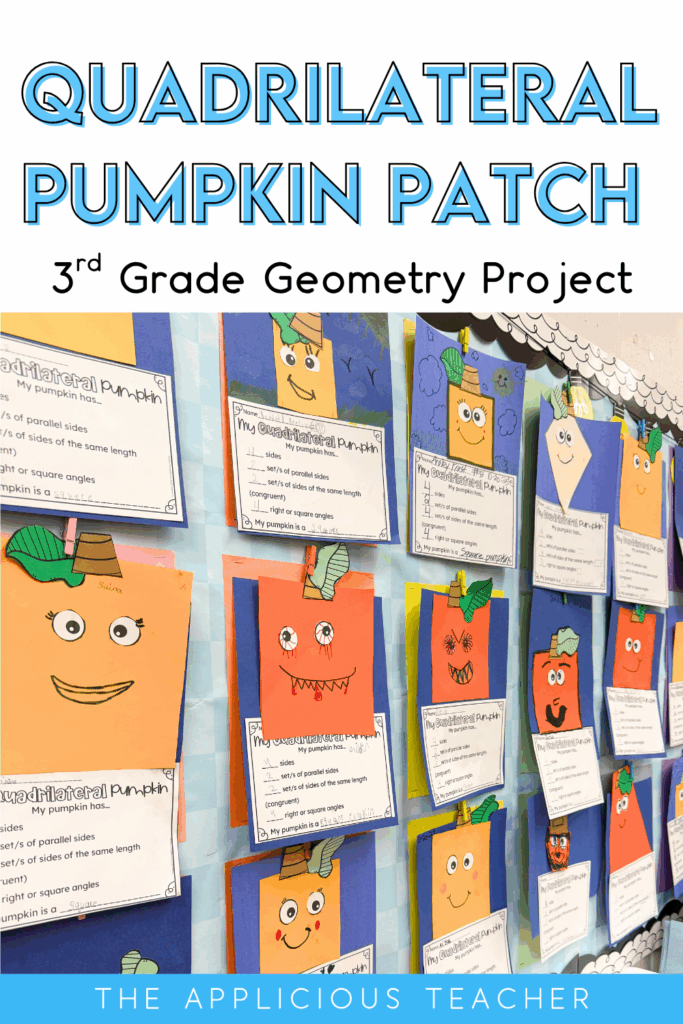
Halloween is one of those magical times in the classroom when learning feels extra hard, and you feel like having a few little spooky activities is the only thing that will save you! This year, in my 3rd-grade Math/Science classroom, we combined math AND creativity with a festive twist using a Quadrilateral Pumpkin Patch Project. Inspired by the beloved book Spookley the Square Pumpkin, this quadrilateral activity helped students practice identifying, classifying, and comparing quadrilaterals, all while crafting their own unique pumpkins to add to our Quadrilateral Pumpkin Patch!
Please note this post contains affiliate links. If you follow my links, please know that I make a very small commission from your purchase. There is no cost to you, but this extra coinage allows me to continue creating free resources and writing awesome content for you!
Shape Review and Quadrilateral Discussion
For this quadrilateral activity, we started off by reviewing all the shapes and their attributes. We discussed sides and vertices. We also discussed line types. Students made a reference page in their math notebooks to help them remember the key terms we used. Parallel lines are a tricky one, folks!
Setting the Stage with Spookley the Square Pumpkin
The next day, we were ready to compare and describe attributes!
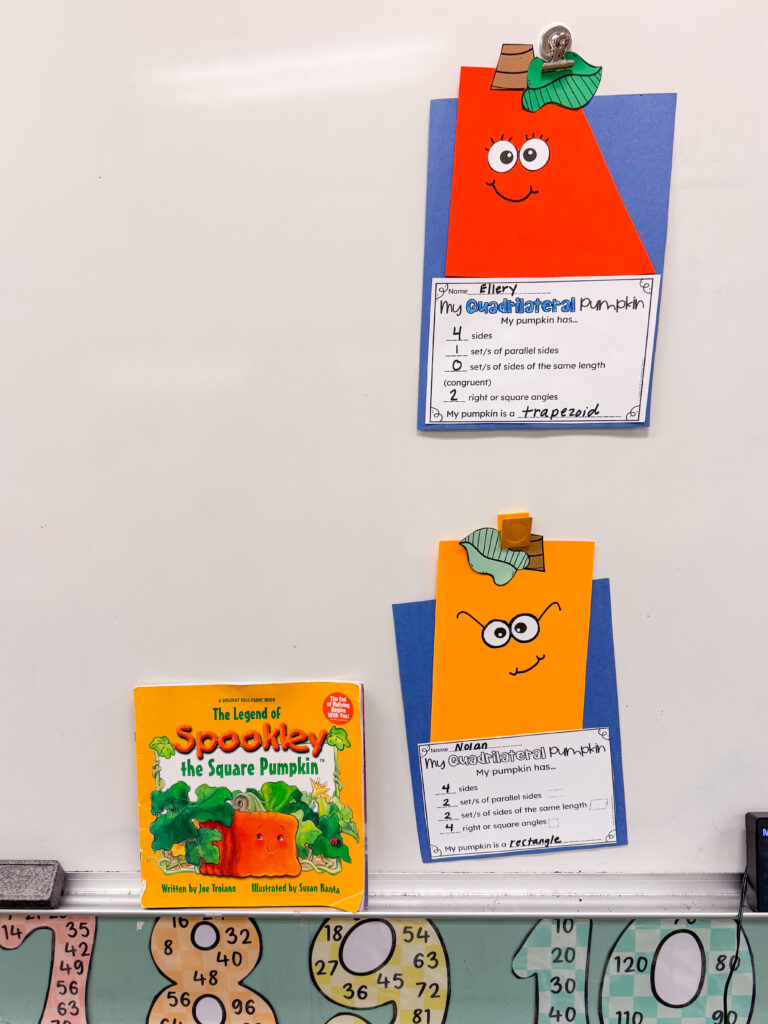
That’s where Spookley the Square Pumpkin came in! This is such a perfect fall story for discussing quadrilaterals in a fun, relatable way. The students quickly connected Spookley’s “different” shape to what we were learning in math: quadrilaterals!
We talked about how shapes can have the same number of sides but look completely different, just like pumpkins at the end of the story in the pumpkin patch. That connection helped students see math as more than just memorizing definitions; it’s about recognizing patterns and differences in the world around them. #teacherwinning
Building Our Quadrilateral Pumpkins
After reading, it was time to turn our math knowledge into a project!
To create, each student was given an orange (or similar shade of paper) and a quadrilateral pumpkin recording sheet. On the board, I projected a Quadrilateral Attributes reference poster and they had their reference page in their notebooks.
The challenge:
- Create a quadrilateral pumpkin inspired by the shapes we had discussed in class: squares, rectangles, rhombi, trapezoids, and parallelograms.
- Label and describe their pumpkin by its attributes (sides, angles, parallel, or congruent sides) on their recording sheet.
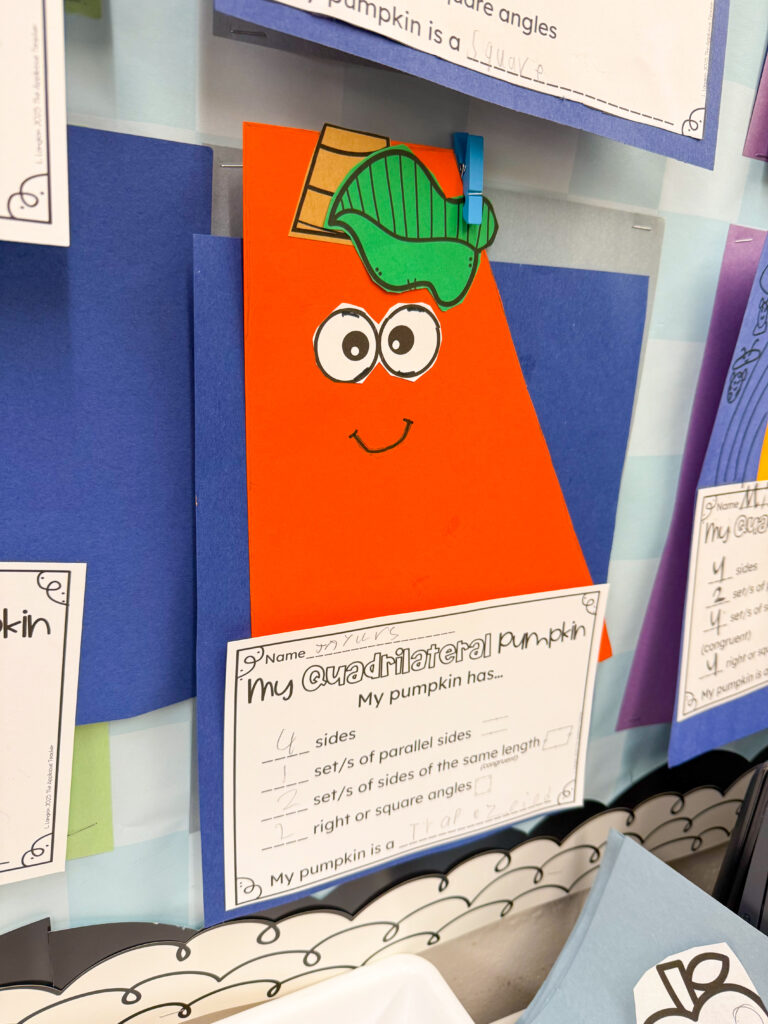
Some pumpkins had square faces like Spookley’s, while others had rhombus or trapezoidal bodies.
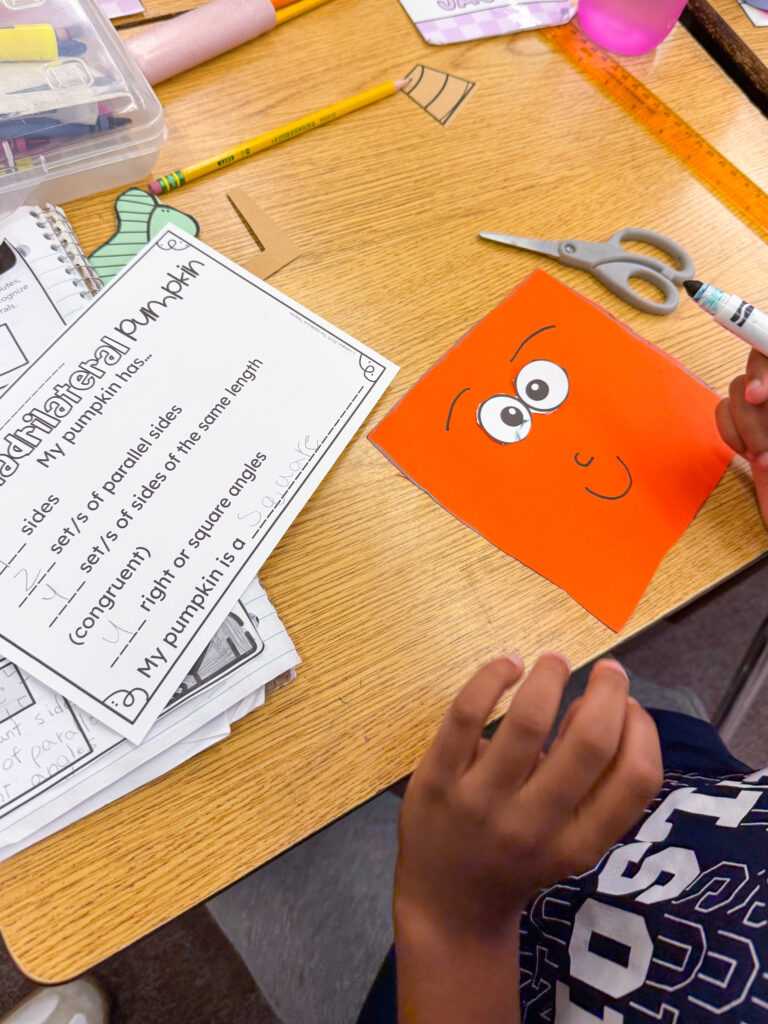
The creative energy was off the charts! Students were excited to show off their math knowledge …and didn’t even realize how much critical thinking they were doing!
To help make sure they were true to the attributes they were describing, I did pass out rulers.

The rulers helped to make sure that lines were straight and the same length. Which was especially important for our rhomus and square pumpkins.
Comparing Attributes of Quadrilaterals
After students finished making their pumpkins, we did an “Inside/Outside” circle.
Students took turns describing their pumpkin by attributes. Their partner had to guess what type of quadrilateral their pumpkin was. Then, students could reveal their pumpkin creation.
It was the perfect way to compare attributes!
Quadrilateral Pumpkin Patch Display
Once our pumpkins were complete, we hung them on my large display board to make our own “Quadrilateral Pumpkin Patch” display. The best part? Listening to students proudly explain to each other,
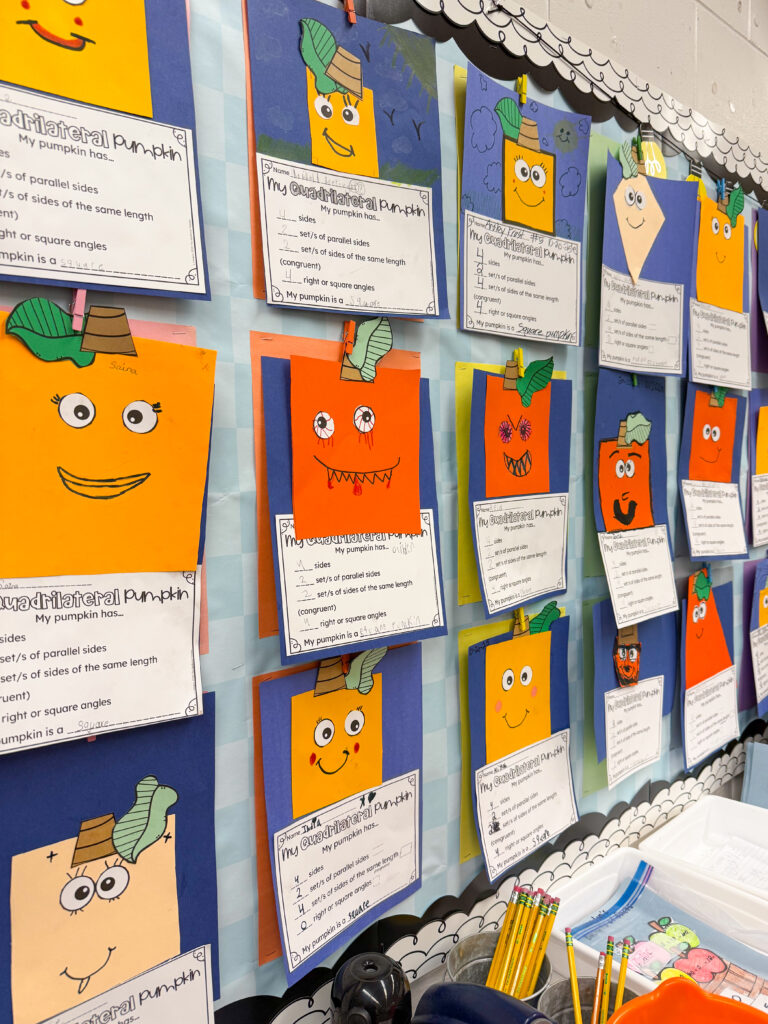
“Mine is a rhombus because it has four equal sides, but the angles aren’t right angles!” or “Look at mine! It’s a square like Spookley because it has four equal sides and four right angles!”
That’s the kind of vocabulary and confidence every math teacher loves to hear. 🎶🎶🎶
The activity made geometry vocabulary and attributes come alive, not through a worksheet, but through hands-on creation and discussion!
Why This Quadrilateral Activity Project Works
The Quadrilateral Pumpkin Patch Project blends visual, kinesthetic, and linguistic learning all in one:
- Concept reinforcement -Students identify and apply key attributes of quadrilaterals.
- Creativity and ownership– Every pumpkin is different, which encourages engagement and individuality.
- Math talk -Kids practice explaining their reasoning using academic vocabulary.
- Seasonal fun– It fits perfectly into October math lessons or a Halloween STEM day!
Bring this Quadrilateral Activity to Your Classroom!
If you’re looking for a low-prep, high-impact math activity that blends geometry standards with fall fun, the Quadrilateral Pumpkin Patch Project is a must-have for your October plans!
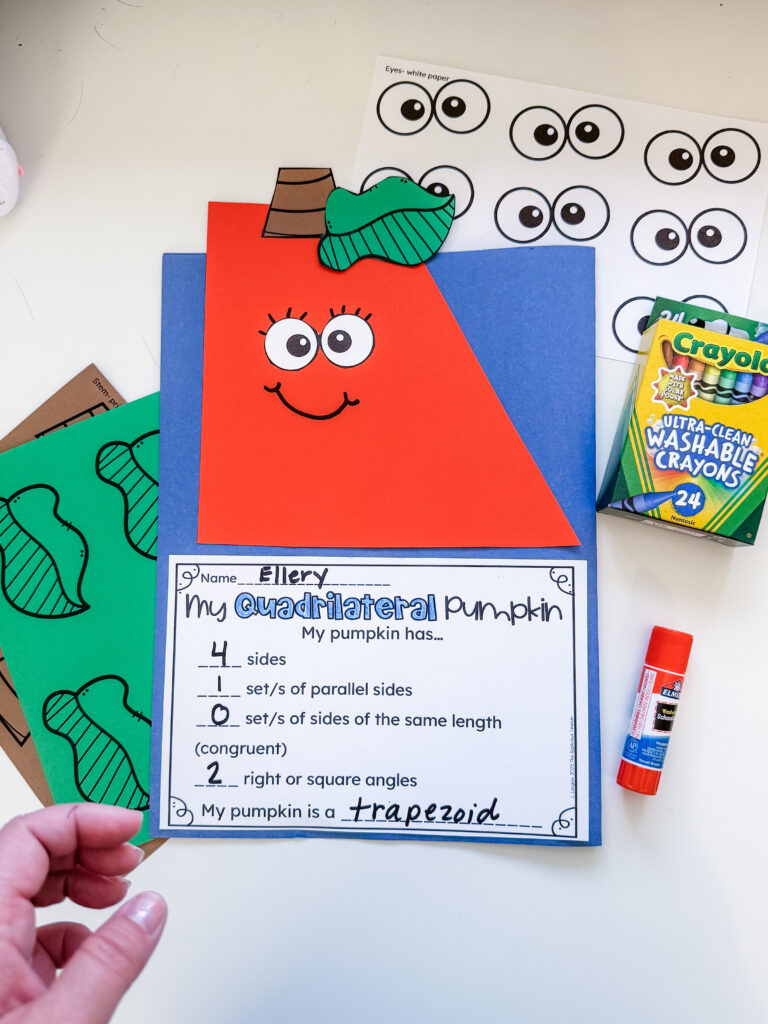
👉 Grab the Quadrilateral Pumpkin Patch Project here and make your classroom pumpkin patch bloom with math learning this Halloween!
Your students will love it …and you’ll love how easily it reinforces geometry skills while keeping things festive and fun!